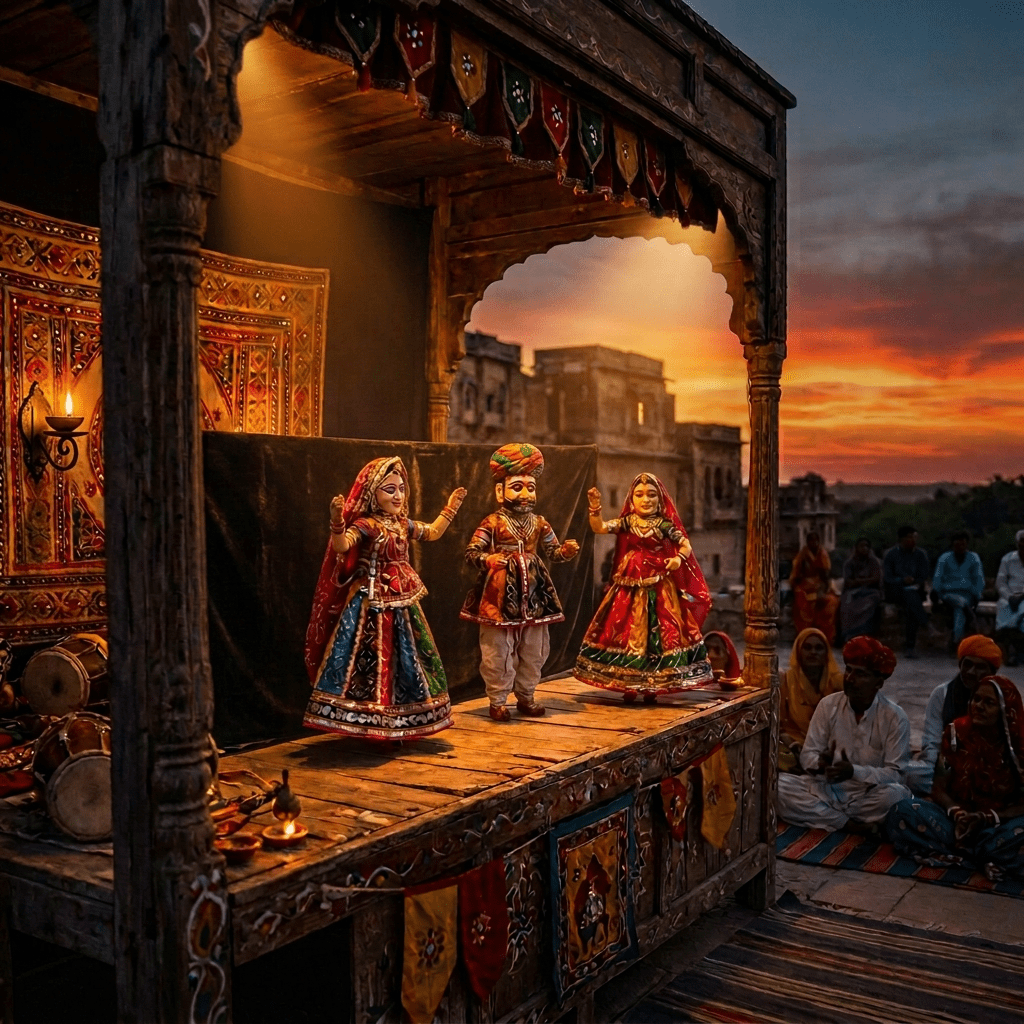
Voice 1: Kathakar tells stories the way a good host offers tea — warm, unhurried, and with something genuinely worth sitting down for.
Voice 2: Today’s episode follows one thread: the living tradition of Kathputli, Rajasthan’s string puppet art — its origins, its storytellers, and why it still matters.
Voice 1: Let’s start with the puppets themselves.
Art Form: Kathputli (Rajasthani String Puppets)
Voice 1: The post opens not with a lecture but with a doorbell. Two friends, Megh and Vani, settle in with snacks and ginger tea, and the history of Kathputli arrives the way good knowledge usually does — through conversation.
Voice 2: Vani sets the scene before the history even begins, and then delivers it: “Once upon a time, in the vibrant land of Rajasthan, there lived a community of skilled artisans known as the Bhat community. They were not just ordinary artists but master craftsmen who possessed the magical ability to bring wooden puppets to life through their skilled hands.”
Voice 1: So the Bhat community aren’t just craftspeople — they’re the custodians of an entire storytelling tradition, and Kathputli is the vessel it travels in.
Voice 2: That’s exactly the framing the post builds toward. Vani goes on to describe the puppets as “the storytellers of the past, carrying with them the rich cultural history and folklore of the land” — narrating tales of valour, love, and mythology through vivid colour and intricate design.
Voice 1: And the performances themselves weren’t abstract — they were specific. Rajput warriors, brave kings, beautiful princesses.
Voice 2: One example the post names directly is the folk hero Amarsingh Rathore, whose heroic tales of bravery and chivalry were brought to life through Kathputli’s movements, leaving audiences, as the post puts it, “spellbound and inspired.”
Voice 1: There’s something quietly pointed about choosing a folk hero as the example — these weren’t just entertainments, they were moral instruction dressed in colour and strings.
Voice 2: Vani’s mother makes that explicit near the close: “Kathputli shows were not just a form of entertainment but a significant cultural tradition, passed down through generations, keeping the spirit of Rajasthan’s rich heritage alive.”
Voice 1: And she says it while presumably still holding the tea tray, which is the most efficient delivery of cultural context I’ve encountered.
Voice 2: The post’s final note is Megh’s — that the tradition is a reminder of why engaging with Indian culture matters at all. The dialogue format does real work here: it makes the history feel like something you overhear rather than something you’re assigned.
Voice 1: Warm, specific, and worth the sitting down.
Voice 2: Storytelling as preservation — that’s the thread running through everything here.
Voice 1: Next time, we’ll see what other threads Kathakar picks up. There are always more strings to pull. Read more…

