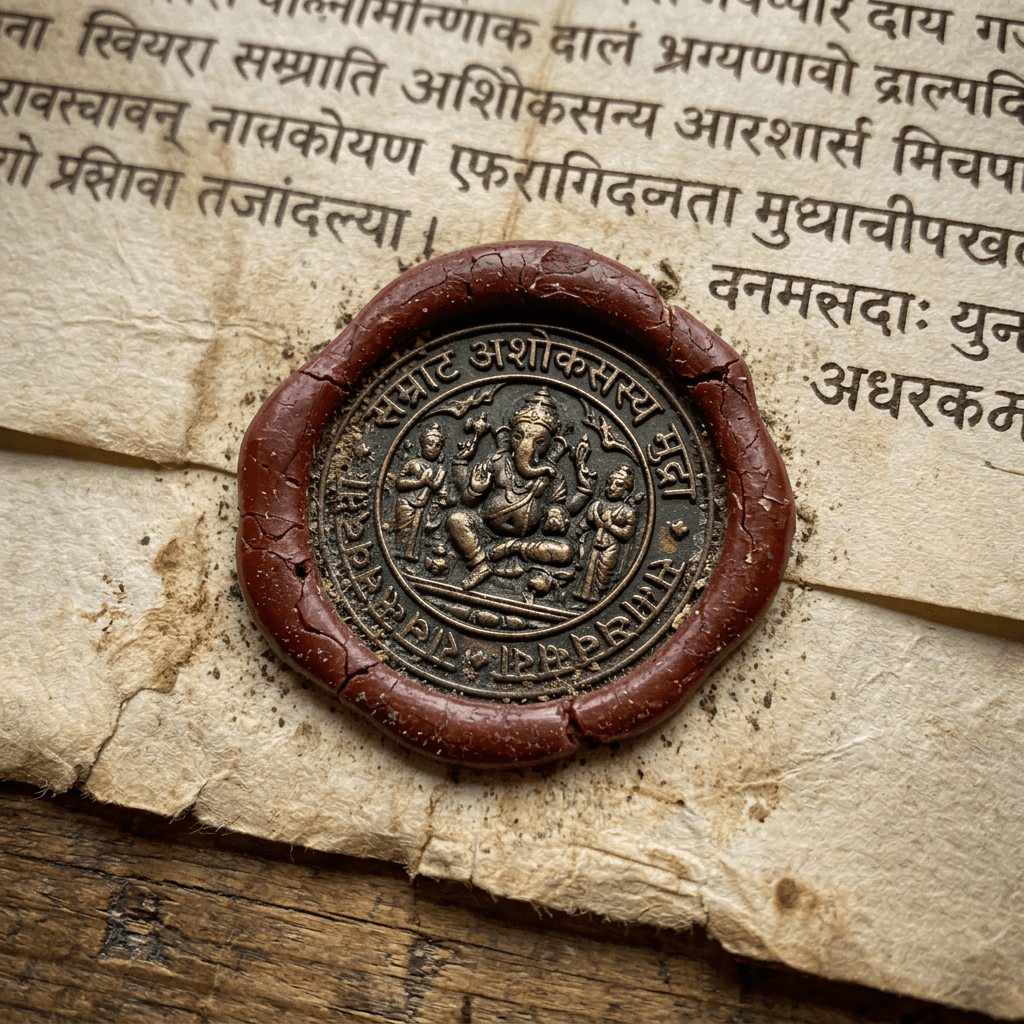
Voice 1: There’s a brass lamp at the centre of today’s Kathakar post, and it turns out the tiny mark on the bottom is doing more historical heavy lifting than most monuments.
Voice 2: Kathakar takes us into the world of ancient Indian guilds — the Śreṇīs — exploring how craftsmen organised themselves, maintained standards, and built something that outlasted any individual reputation.
Voice 1: Let’s start with the mark, the market, and what trust actually cost in ancient Pataliputra.
The Forgotten Guilds: Craft, Trust, and Shared Responsibility
Voice 2: The post opens in a market where a brass lamp carries a tiny engraved mark — and the shopkeeper explains its weight: “A good reputation takes generations to build. A careless day can damage it.”
Voice 1: That’s the whole argument in one sentence. One craftsman’s bad day wasn’t just his problem — it was the guild’s problem, because the mark connected every piece to every person who’d ever made one.
Voice 2: Exactly. The post frames the Śreṇī not as a simple trade association but as an institution that made trust transferable. A travelling merchant who’d never visited a town before could rely on a guild mark the way we’d rely on a hallmark today.
Voice 1: Which is quietly extraordinary — that the ancient world solved the cold-start trust problem centuries before anyone had a word for it.
Voice 2: The post lists what guilds actually did: trained apprentices, settled disputes, maintained quality standards, supported members in hardship, and sometimes provided credit. Quality, as the post puts it, “wasn’t just a personal matter. It was a shared responsibility.”
Voice 2: There’s also a line about knowledge transmission that stays with you — skills like metalworking and dyeing were rarely written down. They survived because people patiently taught them, hand to hand, generation to generation.
Voice 1: Like a story, as one of the characters says. And the post earns that line — it’s been building toward it the whole time.
Voice 2: The post closes by widening the frame: “Civilizations are rarely built only by kings. They are also built by quiet hands.” The potter, the weaver, the blacksmith — each protecting not just their own livelihood but a collective promise.
Voice 1: A promise stamped underneath a lamp that most people would never think to turn over.
Voice 2: What stays with me is the idea that trust was the actual product — the lamp was almost incidental.
Voice 1: Shared accountability as infrastructure. Feels like a concept worth dusting off. Read more…
 Kathakar