Audio 1: Kathakar writes about food, culture, and the stories that travel with both — and today we are following a dumpling across the Himalayas.
Audio 2: We are. The episode covers the momo’s journey from Tibet into the heart of Indian street food culture — how a Tibetan tradition crossed mountains and became a fixture from Darjeeling to Delhi to Mumbai.
Audio 1: Let’s start with the story itself — momos, mountains, and what happens when a dumpling decides to emigrate.
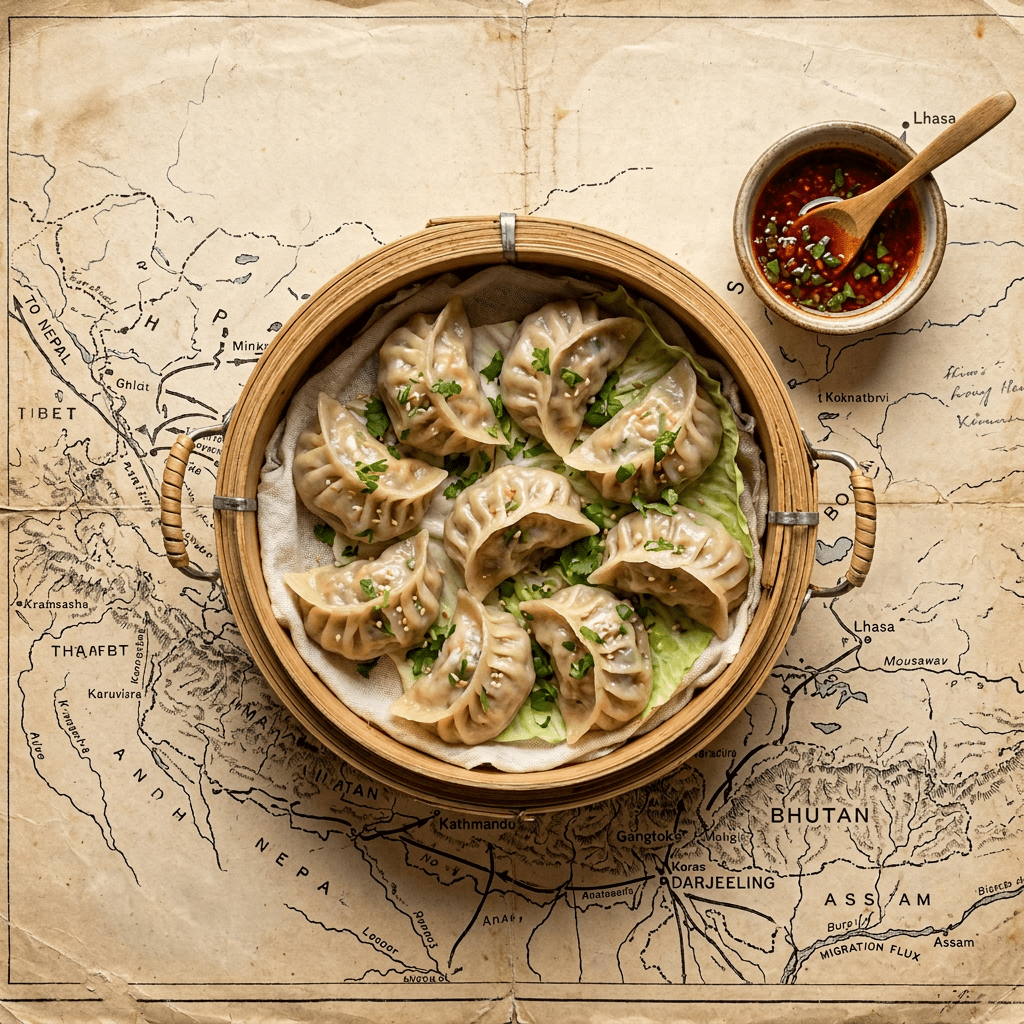
From Tibet to Taste Buds: The Momos’ Journey in India
Audio 2: This piece tells the momo’s story through a conversation — two friends, Vani and Megh, sitting down at a street stall over baked momos, where Megh traces the dumpling’s entire migration across the subcontinent.
Audio 1: A food history lesson paid for in half a momo. The exchange rate of knowledge has never been so literally negotiated.
Audio 2: Megh sets the origin clearly: “In the serene landscapes of Tibet, where the air is crisp and prayer flags flutter in the wind, a culinary tradition quietly thrived. Tibetan families, nestled in their mountain abodes, crafted delicate dumplings called momos. These dumplings, filled with yak meat or seasonal vegetables, held a special place in Tibetan culture, symbolising warmth, community, and tradition.”
Audio 1: So the momo starts as something deeply rooted — not a snack, but a cultural object. And then it moves.
Audio 2: It moves with people. Tibetan immigrants carried the recipe into Darjeeling and Sikkim, adapting it with local Indian spices. From there it reached university campuses in Delhi, where, as the post puts it, sharing momos between lectures became a cherished part of campus life.
Audio 1: And the story keeps expanding outward — Kolkata, Mumbai, the momo cart as a neighbourhood meeting point.
Audio 2: Vani actually names Kolkata herself in the conversation — families gathering around momo carts with chutneys, adding what she calls “Bengali flair.” Mumbai gets its version too: vendors outside offices, steaming dumplings as a midday pause from the city’s pace.
Audio 1: Affordability is the engine the post keeps returning to. Vani puts it plainly — it is the price point in Delhi, Mumbai, and Kolkata that catapulted the momo into stardom.
Audio 2: And then the adaptations followed: paneer, tofu, mixed vegetables for vegetarian eaters, tandoori momos, even dessert momos. The post frames all of this as cultural exchange rather than dilution — the momo as a bridge, not a compromise.
Audio 1: A humble dumpling carrying rather a lot of diplomatic weight.
Audio 2: Megh closes the meal with an invitation: next time you pass a momo stall, pause, take a bite, and “appreciate the journey of this humble dumpling — from the tranquil mountains of Tibet to the colourful streets of modern India.”
Audio 1: Food as geography. Every bite a small act of remembering where something came from.
Audio 2: What stays with me is how the momo’s story is really about adaptation without erasure — the original tradition intact, new layers added at each stop.
Audio 1: Tibet to Darjeeling to Delhi to your nearest street corner. Not a bad journey for a dumpling. More travels next time. Read more…
 Kathakar