Voice 1: There’s something quietly radical about a tradition that decided the best way to seek the divine was to wander around singing about it — and Kathakar has found a way into that world.
Voice 2: This episode follows that thread: Baul music, its philosophy, its living practitioners, and why a folk tradition from Bengal’s villages still resonates far beyond them.
Voice 1: Let’s start with the Bauls themselves.
The Bauls of Bengal: Wandering Voices, Enduring Wisdom
Voice 2: The question the post is really asking is what keeps a centuries-old folk tradition alive — and whether music alone can carry philosophy across generations.
Voice 1: The post sets the scene through a conversation, and the mother character puts it plainly: “In the villages of Bengal, lived a group of wandering musicians known as the Bauls. With origins dating back to the 16th century, these mystical minstrels roamed the countryside, carrying with them the rich tradition of Baul music and philosophy.”
Voice 2: So the upshot is that the Baul tradition isn’t primarily a performance genre — it’s a way of life, one that predates most of the institutions we’d normally associate with cultural preservation.
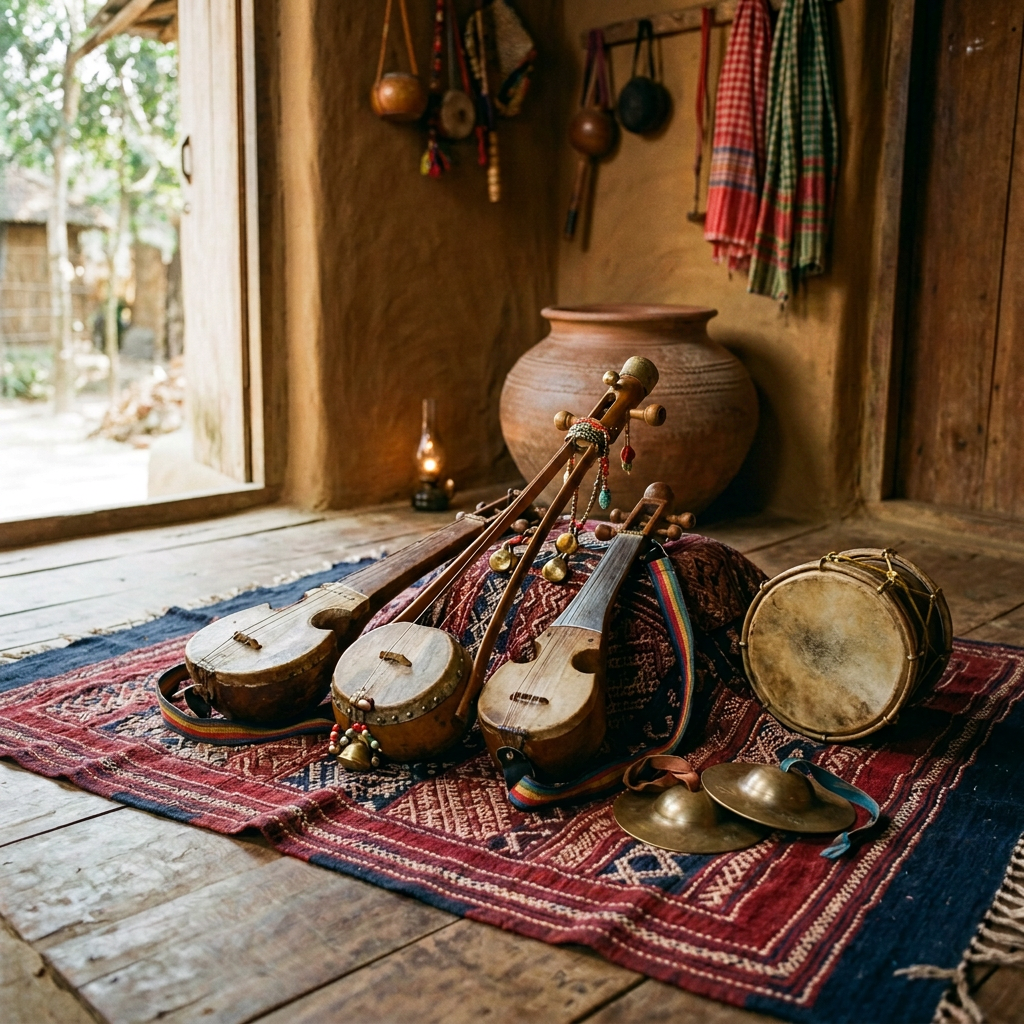
Voice 1: And the instruments matter here — the ektara and dotara, simple by design — because the philosophy is embedded in the simplicity. Songs passed down through generations, the post says, speak of love, longing, and the search for divine truth. There’s a famous Lalon Fakir song cited: “Manush Manusher Jonno,” which translates as “Humans Are for Humanity” — described as encapsulating the unity of all humanity.
Voice 2: The post then turns to what preservation looks like in practice, and Purnadas Baul is the central figure. Born in West Bengal, he blends traditional melodies with contemporary influences, mentors young musicians through workshops and seminars, and has collaborated with international artists to introduce Baul music to new audiences.
Voice 1: Cross-cultural collaboration as a preservation strategy — which is either inspired or the most roundabout way imaginable to keep a village tradition alive. Probably both.
Voice 2: The post also names Paban Das Baul and Parvathy Baul as artists performing at prestigious venues and festivals worldwide — evidence that the international reach is real, not aspirational.
Voice 2: The closing note is that the Bauls “remind us of the universal truths that unite all humanity: love, compassion, and the eternal quest for spiritual enlightenment.” The tradition persists because the questions it asks haven’t dated.
Voice 1: Music as the long game, then — which brings us neatly to what endures when culture travels.
Voice 1: A wandering tradition that outlasted empires by refusing to be institutionalised — there’s a lesson in there somewhere.
Voice 2: The search for what’s universal, carried in the simplest instruments. Worth sitting with. Read more…

