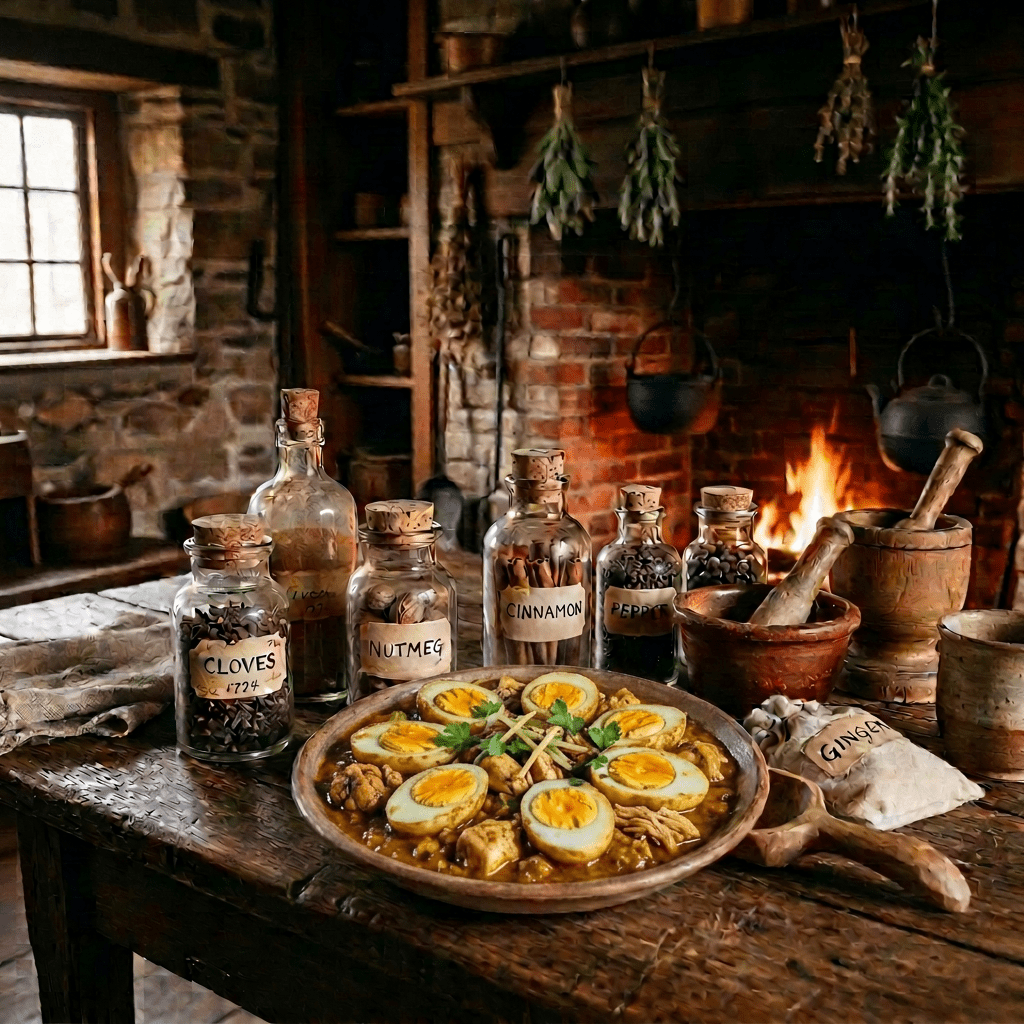
Audio 1: There are dishes that arrive at the table with a recipe, and then there are dishes that arrive with an entire colonial history tucked underneath them. Kathakar has been exploring both.
Audio 2: This episode follows one of those dishes — Chicken Dak Bungalow — tracing where it came from, what it carries, and why it still shows up on menus from Kolkata to the wider world. Let’s start with the story behind the dish itself.
Colonial Culinary Journey: The Timeless Tale of Chicken Dak Bungalow
Audio 1: The question this post is really asking is: how does a dish become a historical document? Chicken Dak Bungalow didn’t just appear on a menu — it emerged from a very specific set of circumstances, and understanding those circumstances changes how you taste it.
Audio 2: The post frames it exactly that way. Here is the line that anchors the whole piece: “Chicken Dak Bungalow emerges as a dish that not only tantalizes the taste buds but also bears witness to the dynamic cultural exchanges of colonial India.”
Audio 1: So it is not nostalgia for nostalgia’s sake — it is a record. The dish is doing the work that a history book does, except you can eat it.
Audio 2: And the history it records is precise. British officials travelling across India stopped at Dak Bungalows — rest houses that became, as the post puts it, “hubs for cultural convergence.” The cooks there worked with limited ingredients and fused British preferences with locally available spices.
Audio 1: Limited pantry, unlimited consequence. That is essentially the origin story of half the world’s great dishes.
Audio 2: The post details the marinade: turmeric, red chilli, cumin, and coriander. Then a slow-cooking process that lets those flavours fully combine. The result is described as mirroring “the cultural synthesis that defines Chicken Dak Bungalow.”
Audio 1: What I find genuinely interesting is the transmission story inside the narrative — a mother who learned it from her own mother, cooking it every Sunday. The dish survived not through restaurants first, but through households.
Audio 2: The post picks that thread up directly. It notes the dish has since “transcended its historical roots” and now appears on Indian restaurant menus worldwide, with a steady rise in popularity and more chefs incorporating it into their repertoire.
Audio 1: From a Dak Bungalow rest house to a global menu item. That is quite the journey for a chicken curry.
Audio 2: The post also quietly weaves in another food encounter — a roadside tea stall stop that the characters make earlier in the day, which the narrative links to an earlier exploration of tea culture and its own set of shared rituals.
Audio 1: Food as connection, whether it is tea between strangers or a home-cooked lunch that carries three generations of memory — that thread runs through everything here.
Audio 1: History in a marinade. It is a more honest archive than most.
Audio 2: And it raises the question of what else is sitting in everyday recipes, waiting to be read that way. That feels like territory worth returning to. Read more…

