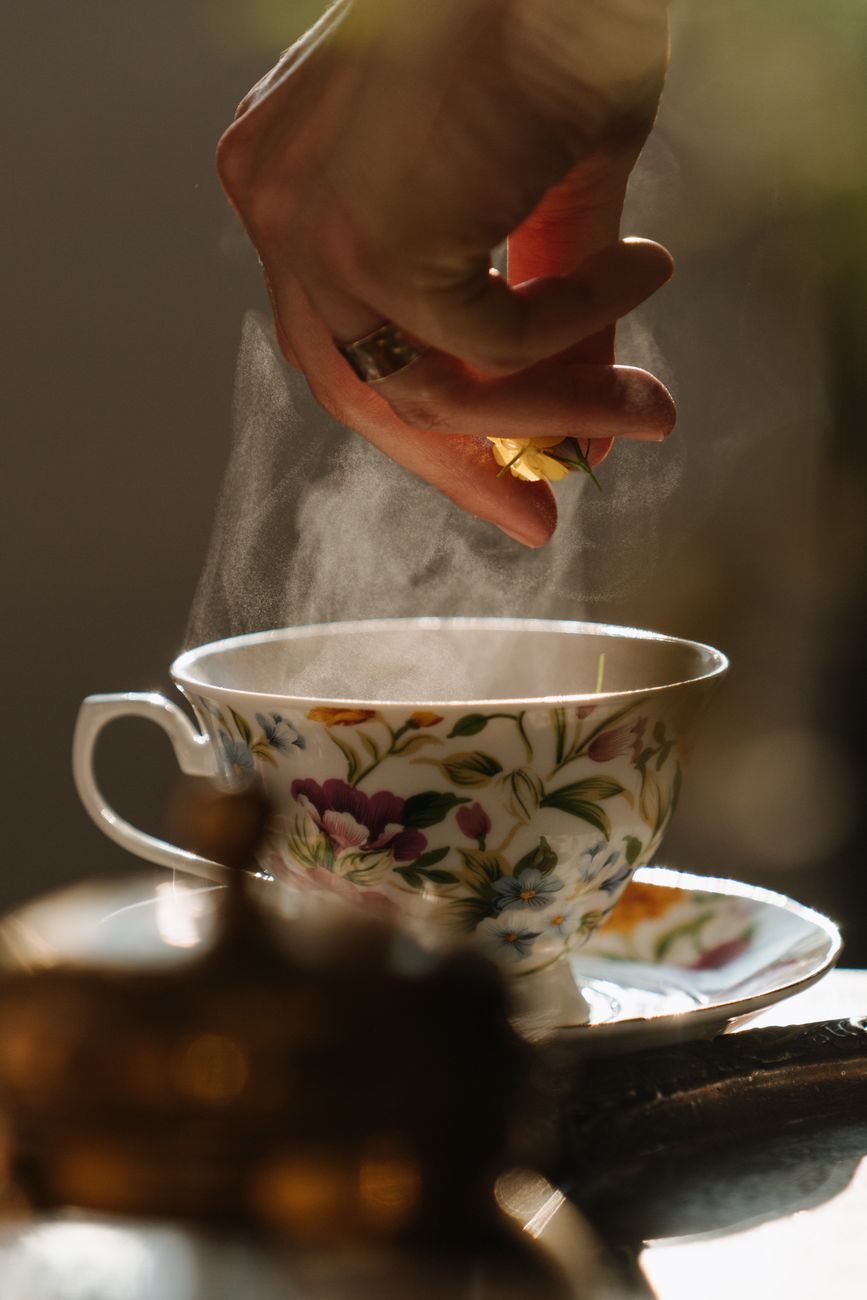
Voice 1: Kathakar has found the ideal setting for a history lesson — a roadside tea stall, an earthen cup, and two friends who cannot finish a sentence without interrupting each other.
Voice 2: This episode follows one story: a conversation between Megh and Vani that turns a birthday shopping trip into a tour of tea’s history, ceremony, and culture across the globe.
Voice 1: Let’s start with the stall, the story, and the sip.
Tea Tales: Sipping Stories
Voice 2: The setup here is deceptively simple — two friends, a market errand, a detour to a tea stall — but the story uses that detour to carry a genuinely wide-ranging account of tea’s origins and cultural life.
Voice 1: Vani gets the ball rolling with the framing that anchors everything that follows. The context is the earthen cups just arriving at the stall, and she says: “TEA, a secret brewing in ancient China’s mist-covered hills, is not just about steeping leaves in hot water, rather a journey woven with secrets, artistry, culture, and hospitality.”
Voice 2: That line sets the register for the whole piece. What follows is not small talk — it’s a structured account of how tea moved from a Chinese imperial discovery to a global ritual.
Voice 1: Vani traces it from Emperor Shen Nong, who supposedly found tea when leaves blew into his boiling water five thousand years ago, through the Silk Road, Japanese Zen monasteries, and the British East India Company. The history is brisk but the arc is complete.
Voice 2: Megh then picks up the cultural thread — the artistry of preparation, the vessels, the ceremony. He describes Gongfu Cha in China and Chanoyu in Japan as practices built around precise movement and immersive experience, not just flavour.
Voice 1: And then the stall itself becomes a kind of symposium. The other customers and the tea seller each contribute a tradition — Moroccan mint tea poured from a height for froth and hospitality, Turkish chai in tulip-shaped glasses as a gesture of friendship, English afternoon tea as a social ritual dressed in bone china.
Voice 2: Indian chai gets its moment too — the chaiwallahs, the regional spice blends, the communal dimension. The piece quotes the idea that chai is not just consumed; it’s shared.
Voice 1: The stall owner then quietly becomes the audience, and the story earns its most specific passage — Vani on Darjeeling, the so-called Champagne of Teas, with its muscatel character shaped by Himalayan altitude, cool climate, and a Geographical Indication status that protects its name.
Voice 2: Vani also mentions that her personal favourite is actually Assam CTC — Darjeeling is second. The tea seller, moved enough by the storytelling, waves her bill. Megh pays his own with a smile.
Voice 1: Hospitality, it turns out, travels in both directions across a tea stall counter.
Voice 2: The story lands somewhere genuine — tea as a thread connecting ceremony, history, and the unremarkable kindness of a vendor who forgives a bill.
Voice 1: Next time, we’ll see what other everyday moments Kathakar turns into something worth sitting still for. Read more…
 Kathakar