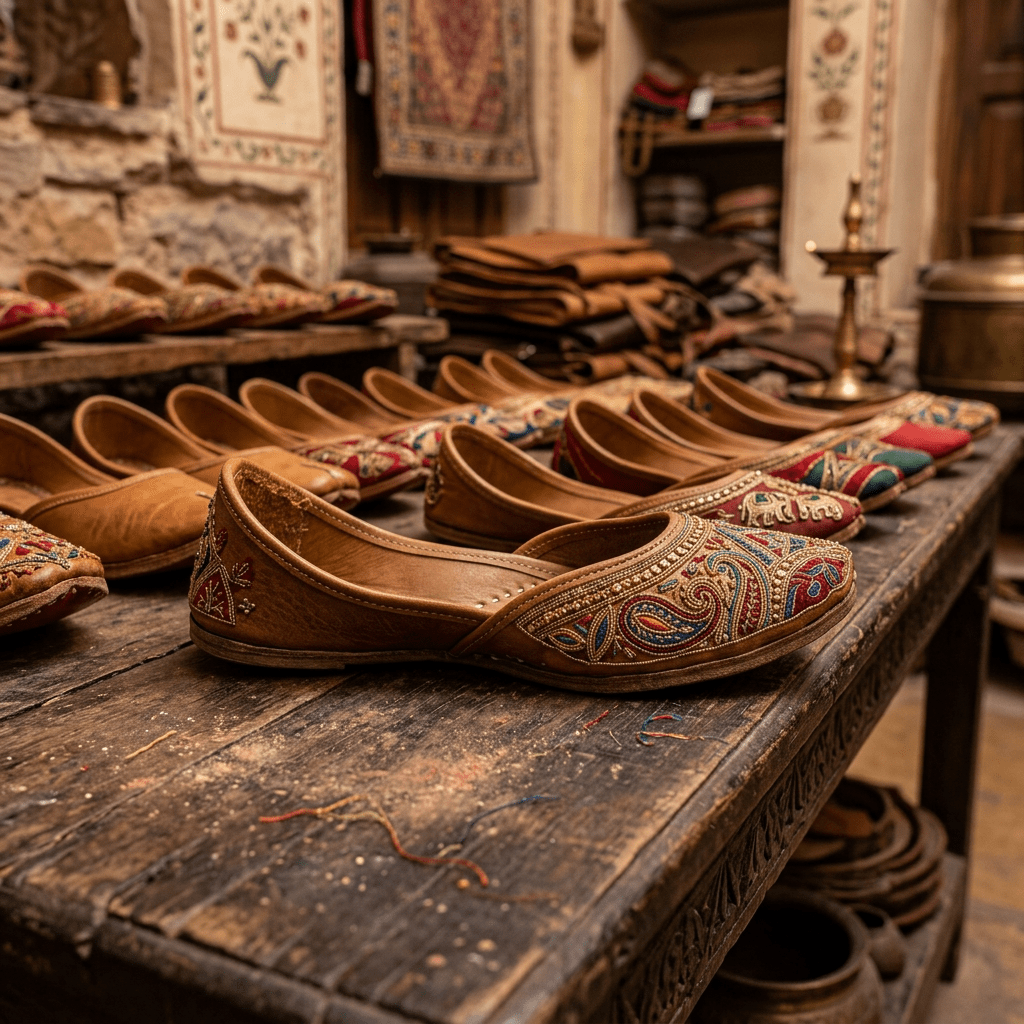
Audio 1: Kathakar tells its stories through conversation — two friends at a doorstep, one spotting a slipper and accidentally starting a history lesson.
Audio 2: That’s exactly the shape of today’s episode. We’re looking at camel leather shoes, the craft traditions behind them, and what it means to carry centuries of heritage on your feet.
Audio 1: Let’s start with the shoes in the doorway.
Step into Tradition: Camel Leather and Living Craft
Audio 2: The question this post is really asking is deceptively simple: what is that slipper, and why does it matter? The answer turns out to reach back centuries into India’s desert regions.
Audio 1: The post sets it up through Vani explaining to Megh, and she puts it plainly: “In the colourful tapestry of India’s cultural history, camel leather shoes have held a significant place, both as a traditional footwear choice and a testament to the country’s rich craftsmanship.”
Audio 2: So the upshot is that this isn’t decorative history — camel leather was a practical response to landscape. In Rajasthan, Gujarat, and parts of North India, the camel was a lifeline, and the hide became the material for footwear built to last in arid, rugged conditions.
Audio 1: The jutti is the clearest example the post offers — soft camel leather, intricate embroidery, worn by commoners and royalty alike. A shoe that managed to be both workhorse and occasion wear simultaneously, which is a harder trick than it sounds.
Audio 2: Vani explains it in terms of the material itself: flexibility and strength are natural properties of camel leather, which made it suited to traversing rough terrain and harsh weather. The durability wasn’t incidental — it was the point.
Audio 1: And then the post doesn’t leave it in the past. Contemporary designers are still working with the tradition, infusing what Vani calls “traditional craftsmanship with innovative designs and global appeal.” The craft is living, not archived.
Audio 2: What the post does well is ground all of that in a small, human moment — Megh noticing the shoe rack on his way out the door. The cultural history arrives because someone looked down at the right moment.
Audio 1: A reminder that the best traditions tend to survive precisely because they’re still sitting where people can trip over them.
Audio 2: The post frames this as one thread in a wider conversation about India’s material culture — the kind of knowledge passed along in an evening’s visit rather than a textbook.
Audio 1: Heritage carried in leather, embroidery, and an offhand comment at the front gate.
Audio 2: Next time, more threads from that colourful tapestry — and presumably more things Megh hasn’t seen before. Read more…

