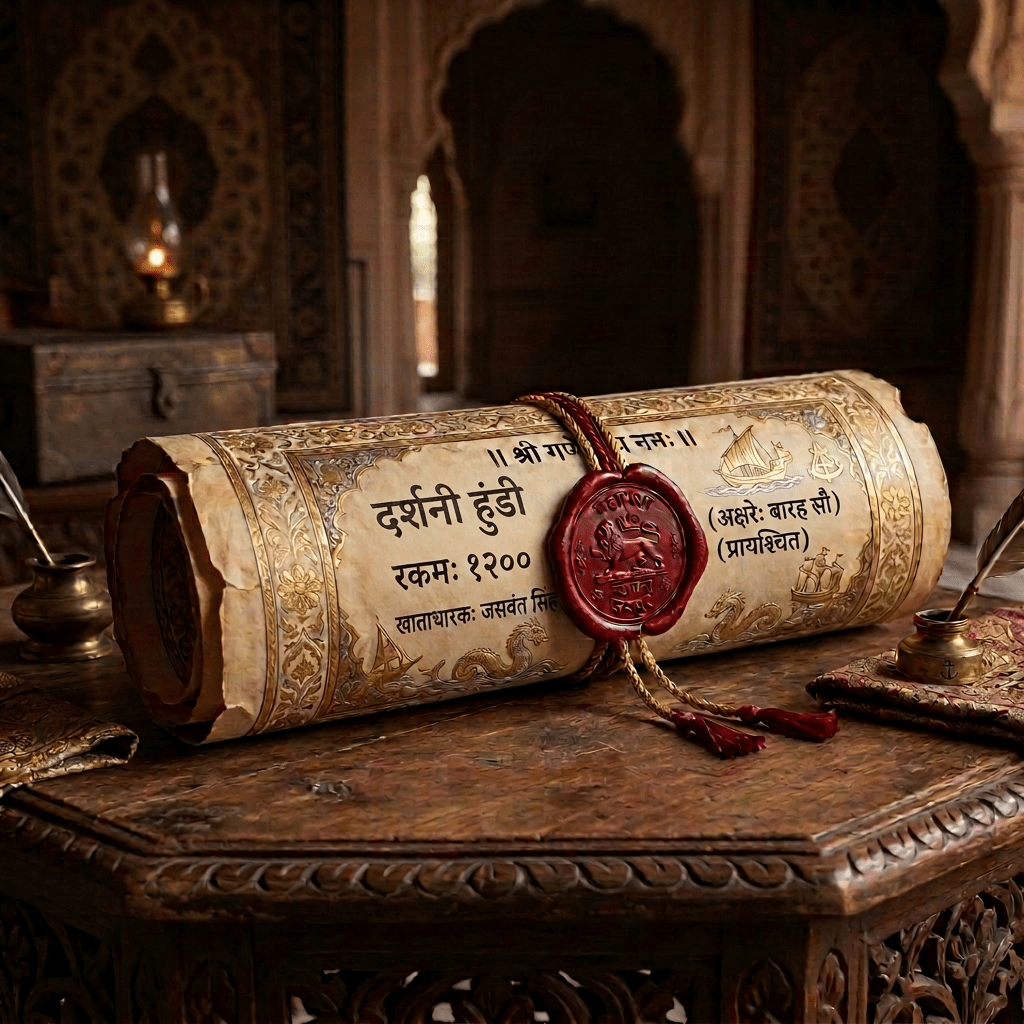
(Recap: Last weekend Megh visited Vani’s place and there was a discussion on medieval India’s banking systems specially referring to Jagat Seth. In continuation of this banking series Megh invited Vani further. So, this Friday evening Vani reaches Megh’s house.)
Megh: Last time, you ended with a simple piece of paper.
Vani: A Hundi!!
Megh: Yes! You said it could move fortunes without moving a single coin. I haven’t stopped thinking about it.
Vani: Most people think trade depends on ships, caravans and warehouses. Few ask how the money travelled.
Megh: I suppose merchants carried gold and silver wherever they went.
Vani: Sometimes. But not always. Imagine travelling from Murshidabad to Surat carrying thousands of silver rupees. The journey itself could cost a fortune. And losing the money meant losing everything. Commerce needed a safer answer!
Megh: And that answer was the hundi?
Vani: Exactly. Instead of carrying wealth, merchants carried trust. A banker issued a hundi. Another banker, hundreds of kilometres away, honoured it. The paper travelled. The money did not.
Megh: That sounds remarkably modern.
Vani: The technology is modern. The idea is centuries old. A hundi could transfer money, extend credit or settle accounts between distant cities. Its value did not lie in the paper. It lay in the reputation of the banking house behind it.
Megh: So people weren’t trusting the document. They were trusting the institution.
Vani: Precisely. And that is why names like Jagat Seth mattered so much. A hundi bearing the promise of a respected banking house could open warehouses, settle debts and finance trade across the subcontinent. Long before digital payments, India had already discovered something timeless. Trust travels farther than money.
Megh: So no one really invented the hundi?
(Meanwhile Megh’s mother enters the room)
Vani: Not that we know of. Like language or markets, it evolved over time. As trade expanded, merchants needed a safer way to move money than carrying bags of silver across hundreds of kilometres. The hundi became that solution.
Mother: Thus, it was created by commerce itself, understand Megh!!.
Vani: Exactly. The best institutions often grow from necessity, not decree.
Megh: Then explain it to me as if I were a merchant.
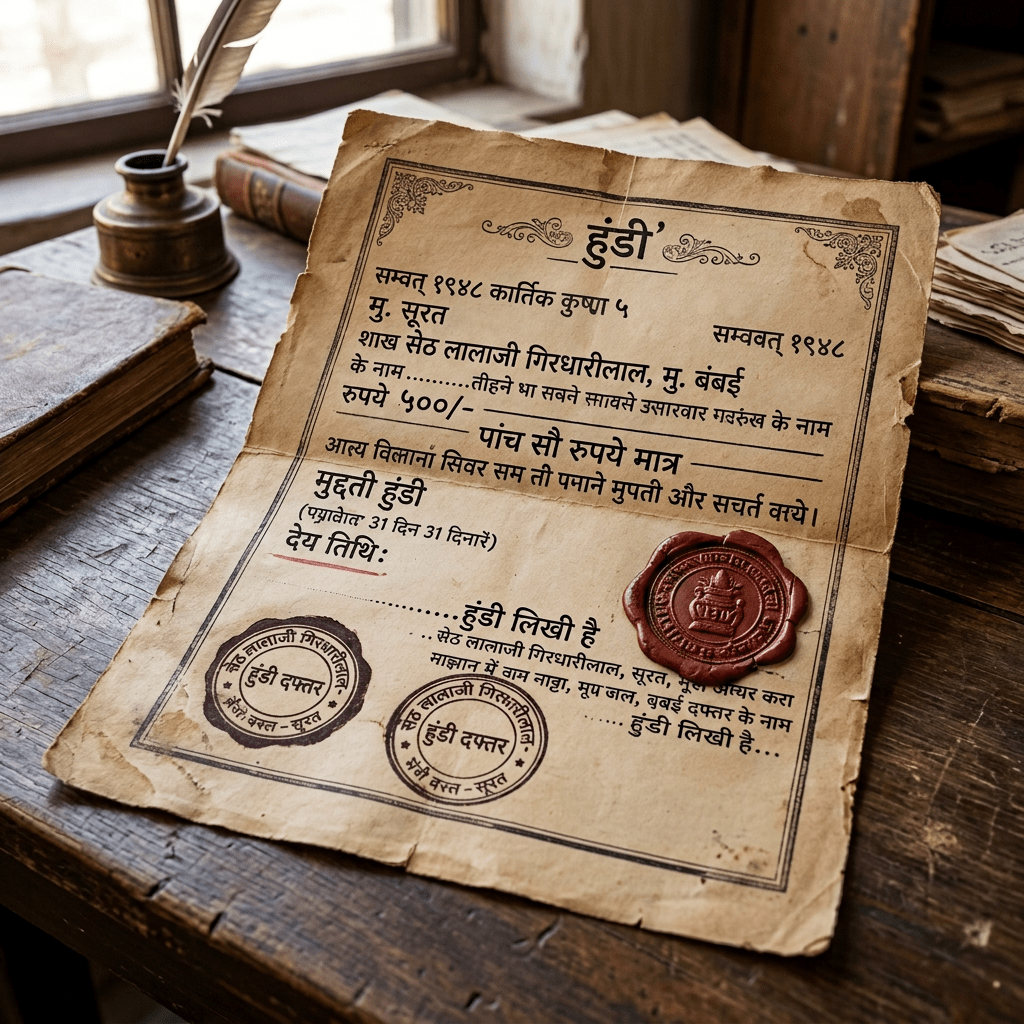
Vani: Very well. Imagine you have sold silk in Murshidabad and must collect payment in Surat. Instead of carrying silver on a journey of several weeks, you visit a trusted banking house. The banker writes a hundi instructing his associate in Surat to pay you the agreed amount. You travel carrying only that document. When you reach Surat, the local banker verifies the hundi and releases the money. The two banking houses settle their accounts separately through their commercial network.
Megh: So the paper travelled. The money hardly did.
Mother: Precisely! That is why the system was both safer and more efficient.
Megh: Was every hundi the same?
Vani: No! Different situations required different kinds.
A Darshani Hundi was payable immediately on presentation.
A Muddati Hundi was paid after an agreed period, much like deferred payment.
A Jokhmi Hundi was linked to risky commercial ventures, especially maritime trade, where payment often depended on the safe arrival of goods.
Megh: So merchants had already developed specialised financial instruments.
Vani: Exactly! The system was far more sophisticated than most people imagine.
Megh: But without a central bank, why would anyone accept a hundi?
Vani: Because they trusted the people behind it. A respected banking house valued its reputation above everything else. One dishonoured hundi could damage relationships built over generations. That is why names like Jagat Seth carried such influence. People were not trusting ink on paper. They were trusting decades of integrity.
Megh: So the real currency wasn’t silver.
Vani: No! It was trust. And perhaps that is the greatest lesson the hundi still offers us today. Long before digital payments connected India through technology, trust had already connected its markets.
Mother: Now it is enough discussion for today. I set the dinner at the dining. So, let’s have that.
Megh: Mom, what’s special for today’s dinner!!
Vani: Luchi, Begun Vaja, Kosha Mangsho and Rosogolla; aunty already told you (while smiling gently).
Mother: But there is a twist. One item in the menu was cooked using a traditional cooking style that I will share while having the dinner. Ok!!
Vani: Hurry Megh!! I can’t wait much (while both are moving towards the dining area).

