(Recap: Megh has come to Vani’s new house during Vijaya Dashami. He found one showpiece very interesting. Vani was telling the cultural history of that showpiece, i.e., the Kathputli, Rajasthani String Puppet while Vani’s mother offers some snacks & Sohan Halwa to them).
Vani: Good to see that you like this Megh, nowadays people are losing interest from these.
Mother: You people are the future of the country. It is quite expected from all of you that you should know at least a brief overview of our rich cultural heritage.
Megh: Yes aunty. We will try. But Vani please tell me about this sweet. It is very tasty.
Vani: Oh! About Sohan Halwa?
Megh: (While continuing the bites on Sohan Halwa) yeah! yeah! Its name is also very interesting. Thanks, aunty, for offering this, otherwise I will miss the taste!
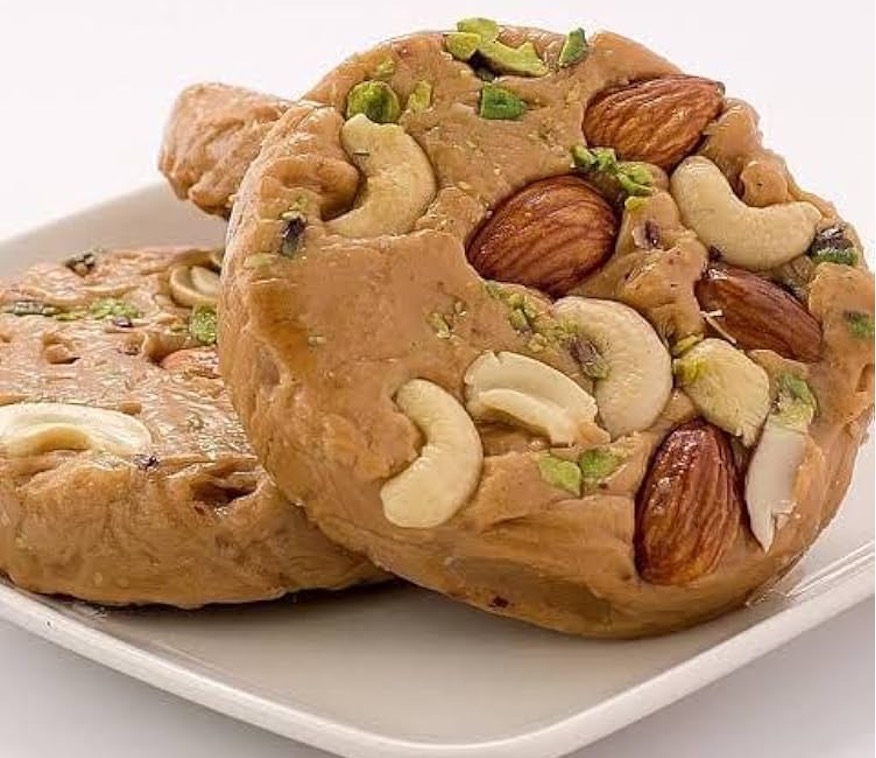
Vani: The origins of Sohan Halwa date back to the Mughal era, during the reign of the great Emperor Akbar. It is said that the emperor’s royal kitchen was graced by a skilled chef named Sohan, whose culinary prowess knew no bounds. Seeking to create a dessert fit for royalty, Sohan experimented with a blend of milk, sugar, ghee, and a variety of nuts, perfecting a sweet treat that would eventually be named after him – Sohan Halwa.
Megh: Oh! Really, that’s very cool (while making a jovial face).
Vani: As the Mughal Empire flourished, so did the fame of Sohan Halwa, spreading to different corners of the Indian subcontinent and beyond. From the bustling streets of Delhi to the vibrant bazaars of Lahore, the aroma of this delectable confection filled the air, tempting passers-by and leaving a lasting impression on the palates of those fortunate enough to taste it.
Mother: Yup!
Vani: Even today, the legacy of Sohan Halwa continues to thrive, with various regions putting their own unique spin on this iconic sweet. From the bustling lanes of Old Delhi to the vibrant streets of Lahore’s Anarkali Bazaar, families and friends gather to share this traditional dessert during special occasions and festive celebrations.
Megh: Is the same recipe continuing for more than 300 years?
Vani: Well, one notable example of this cultural delicacy’s enduring popularity can be found in the bustling bazaars of Amritsar, where local artisans continue to handcraft Sohan Halwa, blending the traditional recipe with their own regional flair. The luscious strands of saffron-infused Sohan Halwa, embellished with an assortment of almonds and pistachios, serve as a testament to the rich cultural history and culinary heritage that this sweet delicacy represents.
Megh: Oh! Wow! I think we lag on the advertisement part. Otherwise, this also can be tagged as finger lickingly delicious (while making a cheerful face).
Mother: Through the ages, Sohan Halwa has remained more than just a dessert; it is a symbol of celebration, unity, and the enduring sweetness of tradition, forever etched within the cultural tapestry of the Indian subcontinent.
Vani: So true, Maa!
 Kathakar